Define before you design.
When a problem is genuinely new, the first design artifact may be the definition of the problem itself.
Creating a scalable way for enterprises to understand, measure and improve digital experience—and turning the idea into a product offering.
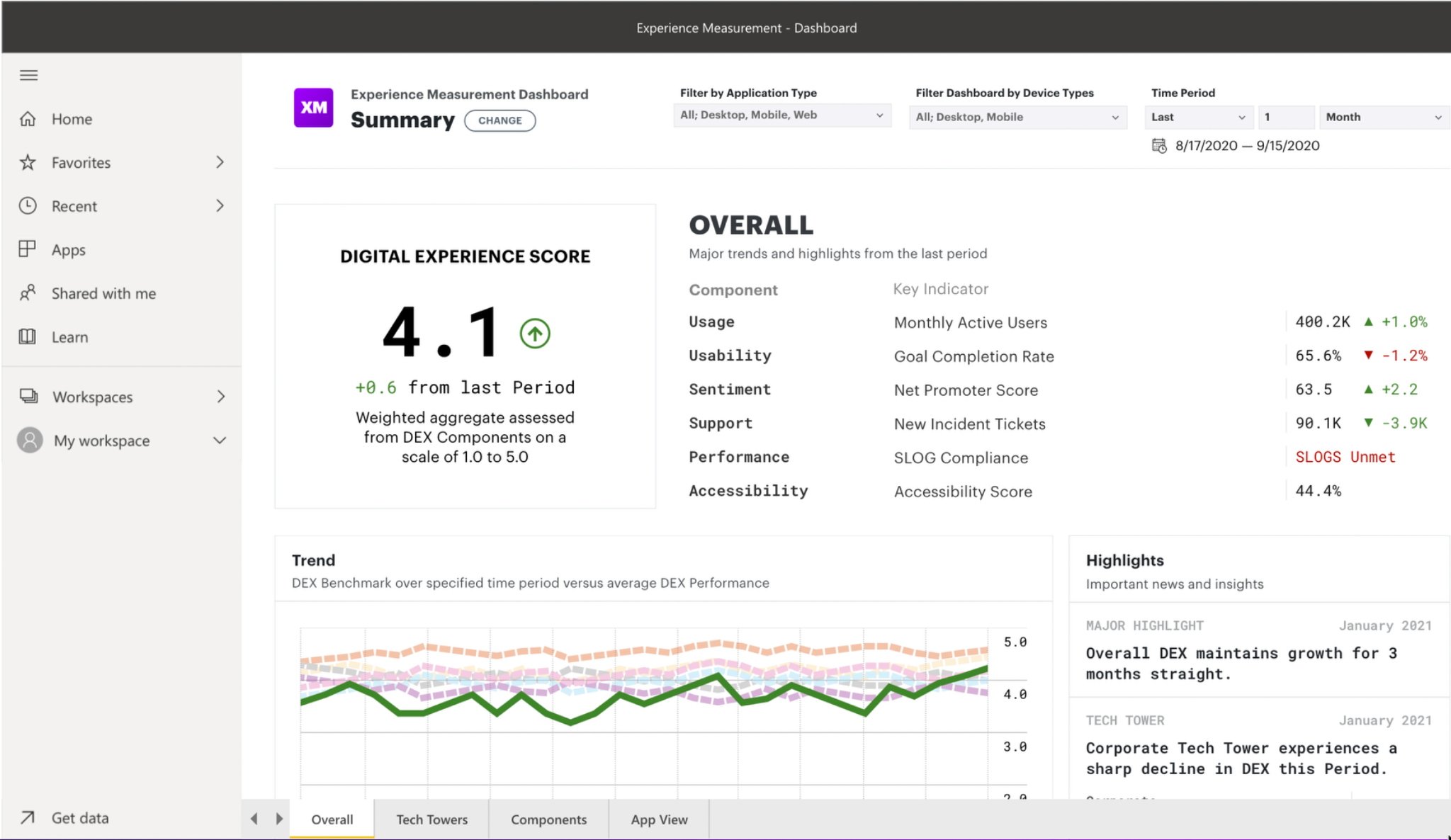
Every year, the global IT management team struggled to prioritize investments because there was no standardized way to measure experiences holistically across thousands of apps in the ecosystem.
Every team requested an enhancement budget, but there was no data-driven way to validate the need and business value of experience interventions.
Traditional product metrics could tell us what people did. They couldn't reliably tell leaders whether the experience itself was working—or where to improve it.
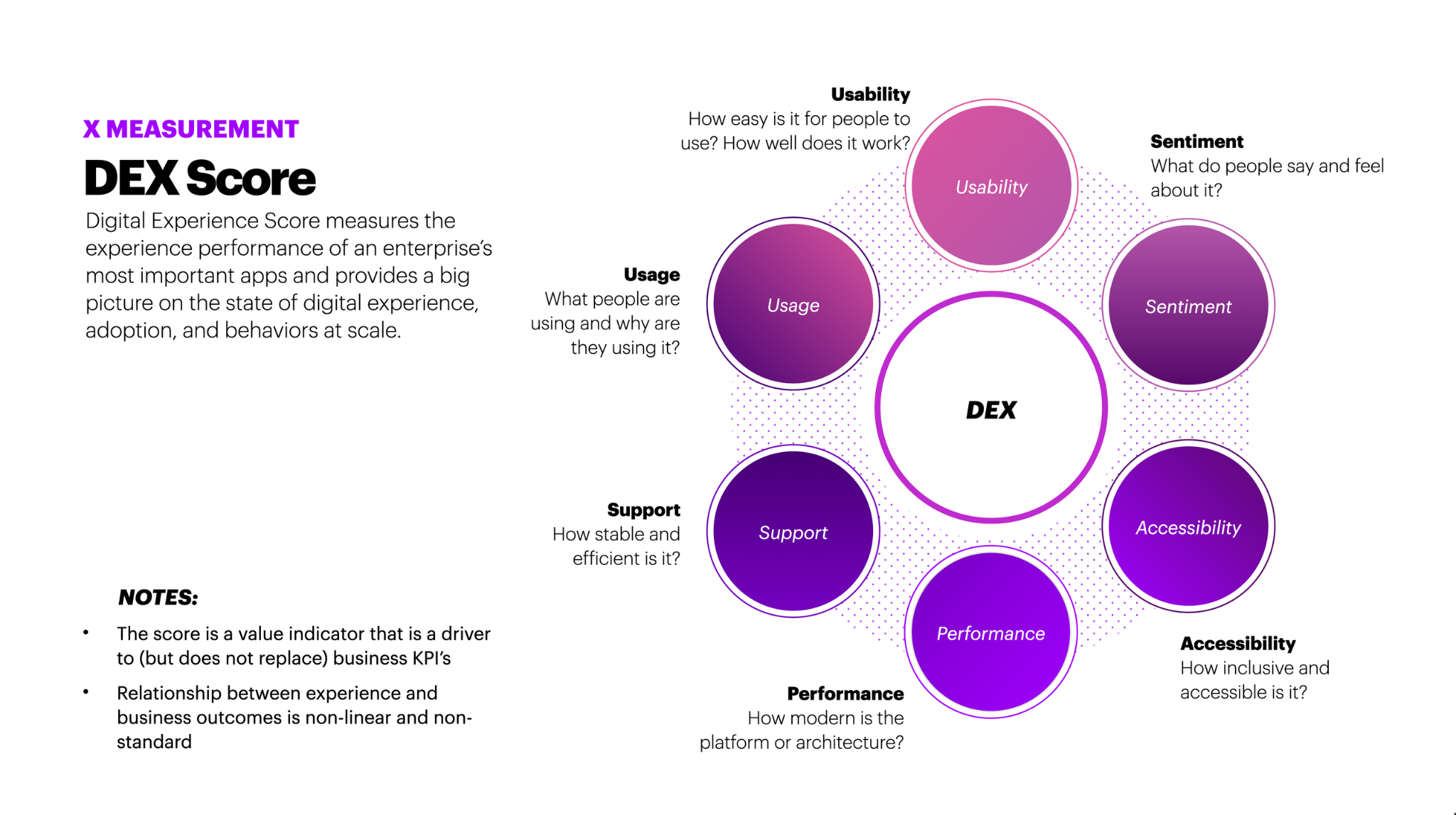
I was the principal inventor of a scalable enterprise user-experience measurement framework: the Digital Experience Score. Rather than rely on a single proxy, DEX brought six dimensions together to create a broader view of experience at scale.
My role moved continuously between design direction and product leadership: defining the vision, shaping the measurement model, aligning technology partners and turning an abstract idea into something teams could actually use.
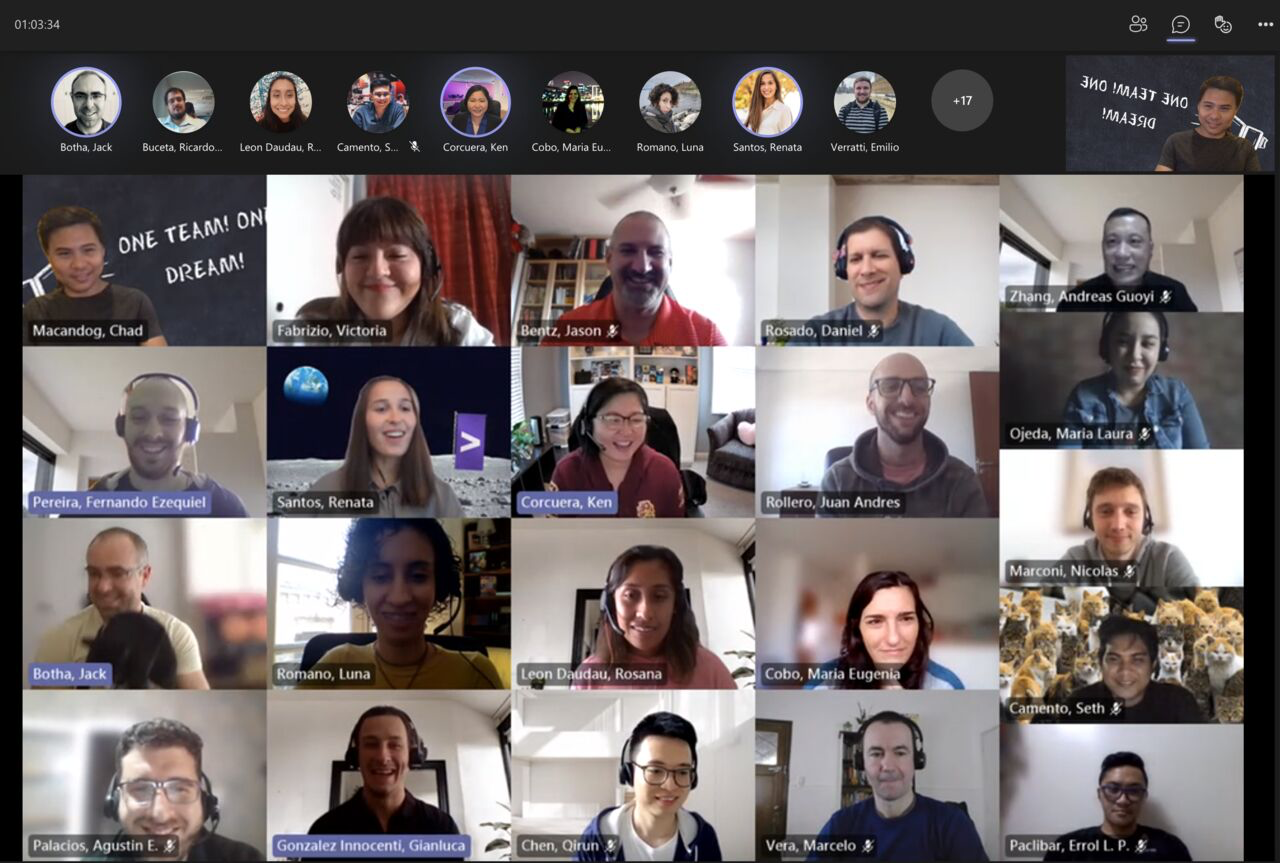
As Design Director and chief product owner, I helped orchestrate the platform across design, data, AI/ML, engineering, operations and change management—while coordinating external technology providers.
What began as a way to answer a difficult design question became a repeatable capability: a measurement framework, technology platform and product offering.
Users across hero applications were touched by the experience measurement program, helping teams identify meaningful areas for experience improvement.
Created a scalable enterprise user-experience measurement framework.
Turned the framework into a technology-enabled platform and dashboard.
Partnered with executives to drive enterprise use and identify improvement opportunities.
Packaged the solution as a digital workplace offering for clients.
The outcome I'm proudest of was building a team, vision and foundation capable of continuing to deliver after I was gone.
When a problem is genuinely new, the first design artifact may be the definition of the problem itself.
A useful model gives multidisciplinary teams a shared language for making decisions long before a polished product exists.
Moving from an idea to a platform meant translating continuously between experience, data, technology and business value.
The direction has to be strong enough to create momentum and flexible enough to change as evidence arrives.